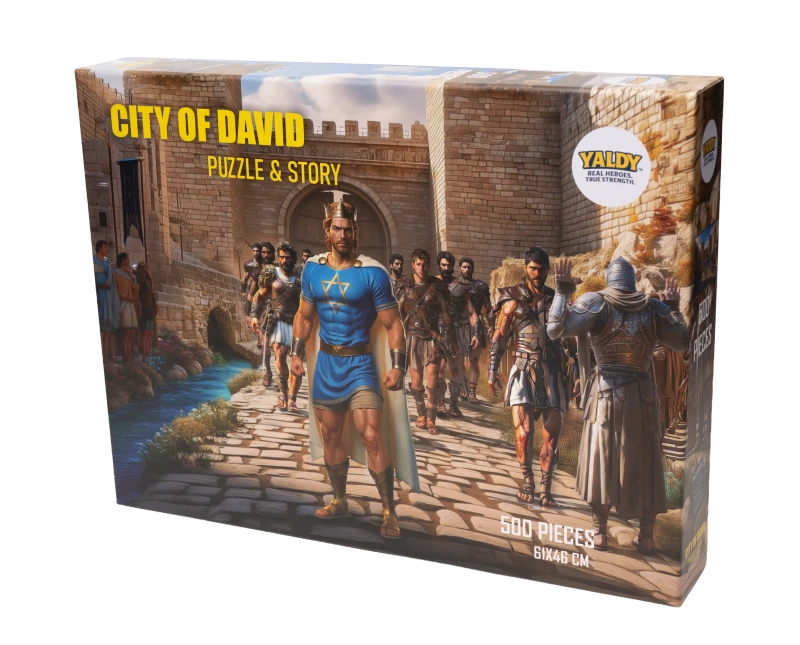
From the days of Joshua, the hold on this ridge was never fully broken. Generation after generation passed beneath it, and the gate stayed shut. The Jebusites laughed: even the blind and the lame would turn the king of Israel back.
“You shall not come in here; even the blind and the lame will turn you away — that is to say, David shall not come in here.”
— II Samuel 5:6
Character Dossier
Visual Coming Soon
Jebus is the stronghold of Zion — ancient Jerusalem on its narrow ridge, walls of stone climbing from the valley. From the days of Joshua its hold was never fully removed. Judah struck the city and Benjamin lived beside it, but the Jebusite fortress stood unbroken — until David. The conquest is not the opening of the story. It is its closing.
The blind and the lame.
On the wall stood the taunt. In its plain sense, mockery: this place is so strong, even the blind and the lame could hold you off. The midrash tells of more — two bronze idols set up bearing the oath Abraham swore to Avimelech, so sure of their wall that they named it after a promise. Then Joab found the water shaft. He went down alone, cold water at his ankles, and climbed in the dark. The bolt slid open from the inside.
The fortress that had never fallen had a name now. City of David.
Four Threads
Connections
King David
The one who broke the hold.
What no tribe had finished for generations, the king of all Israel finished in a day. He took the stronghold and made it the heart of a kingdom.
The verse itself calls him “Aravna the king.” He bowed to David and offered his threshing floor as a gift — and David bought it for full price: fifty shekels of silver for the floor, six hundred of gold for the place. That floor became the place of the Temple. The Jebusite is no mere villain.
II Samuel 24:24 · I Chronicles 21:25
The Blind and the Lame
Idols on the wall.
Two bronze figures set on the rampart, bound to an ancient oath. Rashi teaches that one was made for Isaac, whose eyes dimmed, and one for Jacob, who limped. Strong enough to mock a king — until the wall was opened from within.
Rashi on II Samuel 5:6
Visual Coming Soon
The wall that mocked a king was opened from the inside.
The Fall of Jebus
The Record
Facts & Depth
Identity
The stronghold of Zion
Defense
Stepped-stone walls · the water shaft
Pride
Unbroken since Joshua
Noble
Aravna the Jebusite
Fate
Became the City of David
Method
The Unbroken Hold
Not a city untouched by war — Judah had struck it before. But the Jebusite stronghold itself was never fully removed, generation after generation, until David. The right words are precise: the hold endured until the king of all Israel ended it.
Moment
From Threshing Floor to Temple
The deepest turn of the Jebusite story is not a defeat. Aravna's threshing floor — bare rock, chaff, and oxen — became the ground of the Temple. The fortress of the enemy turned into the most holy place. Conquest became consecration.