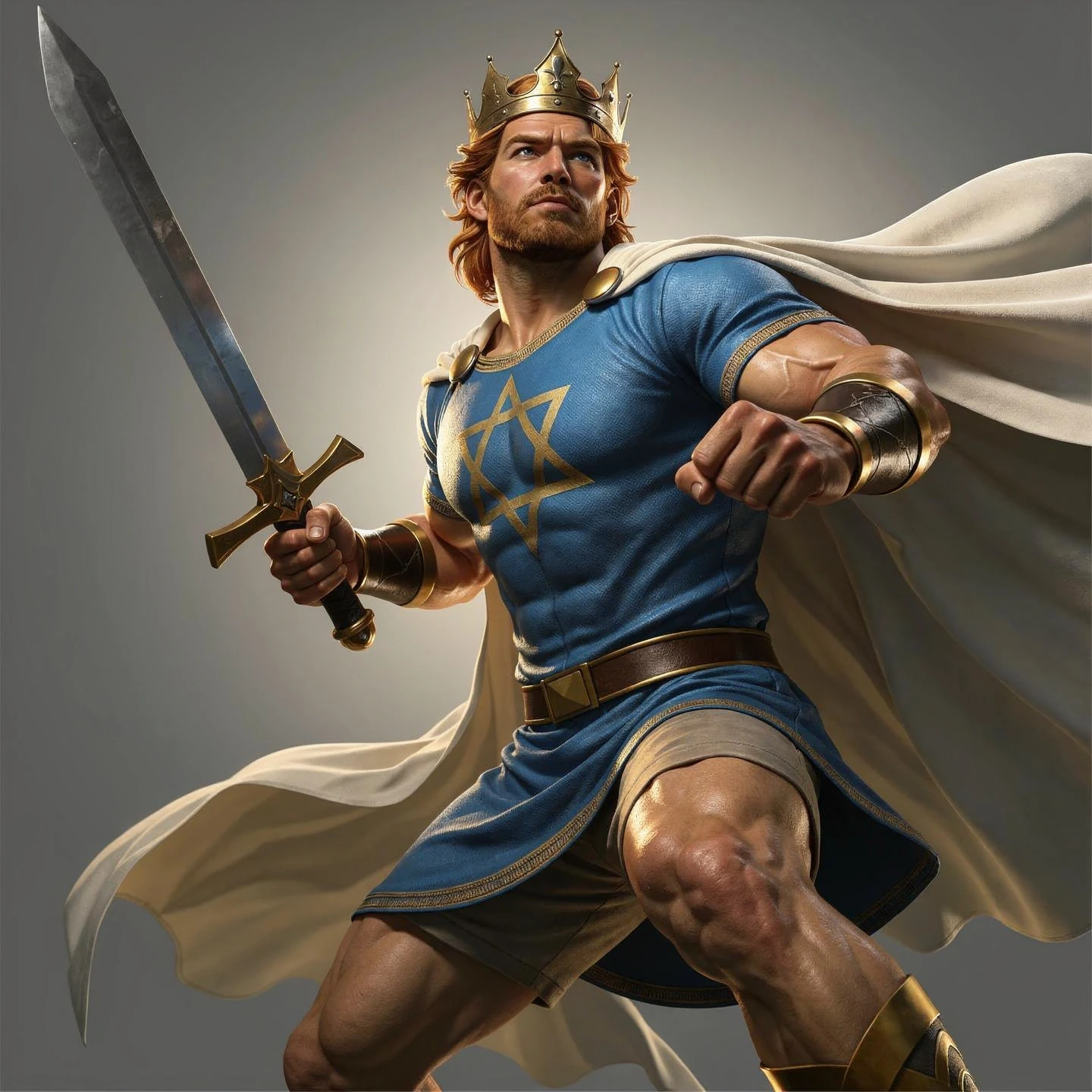
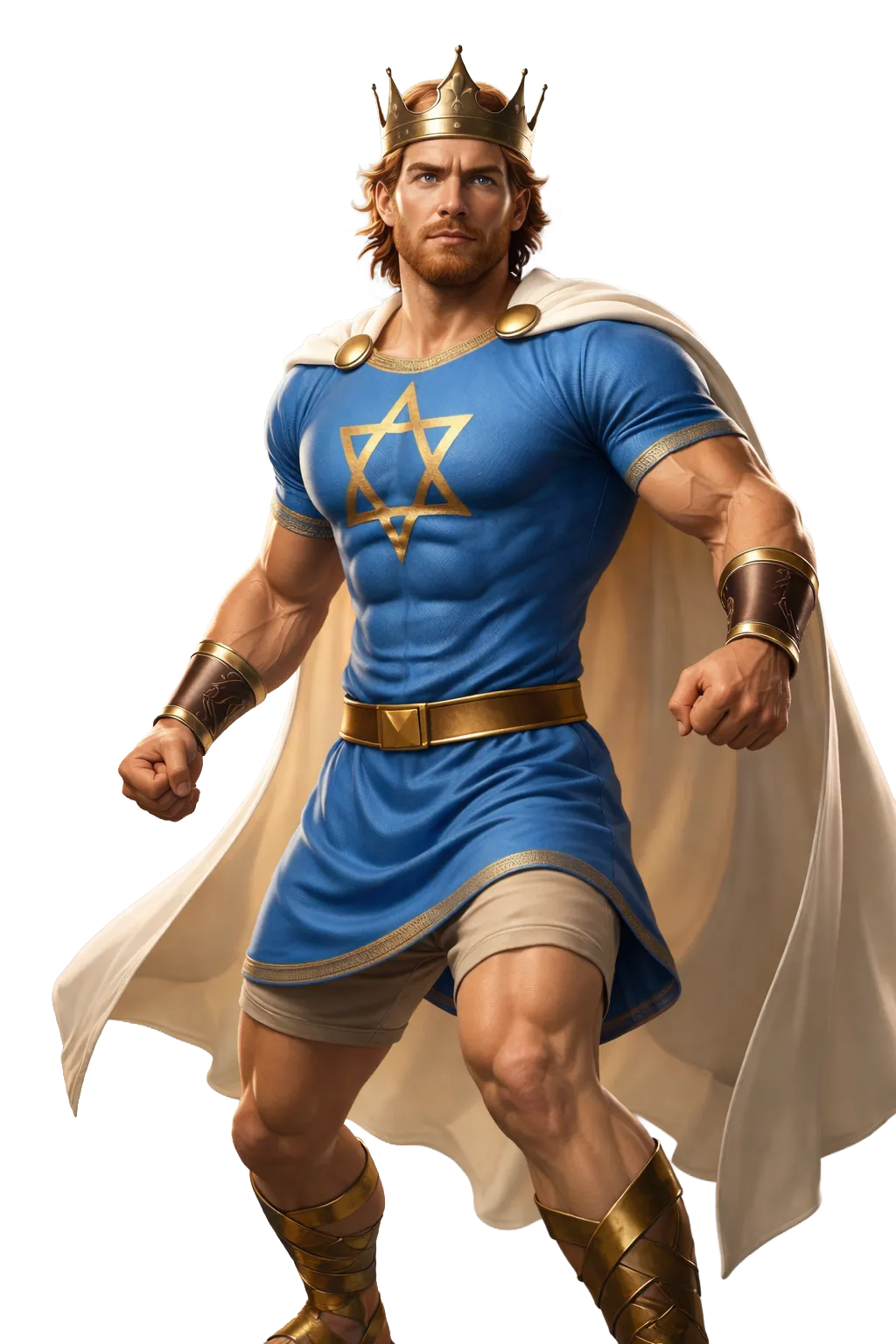
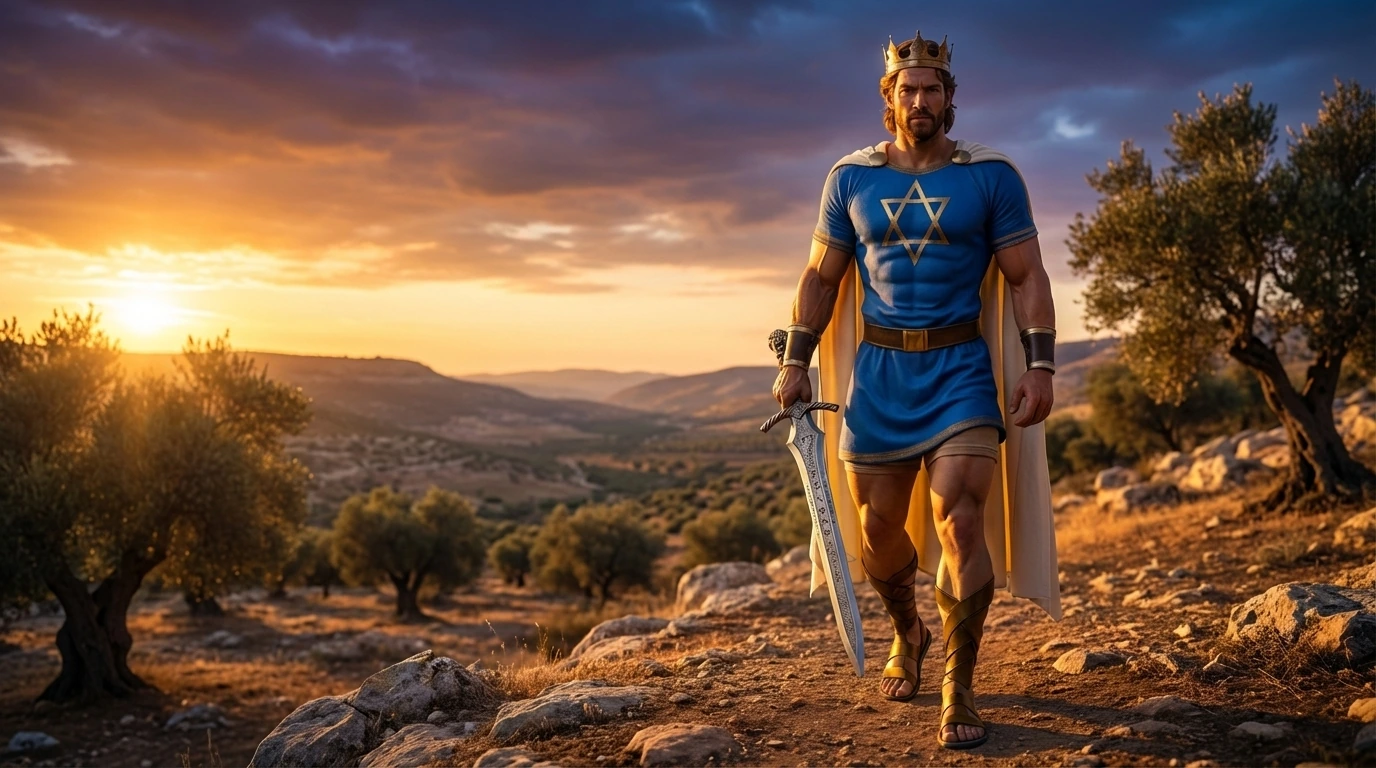
He fights. He sings. He prays. He judges. The same hand that held a sling on a Bethlehem hill now holds a scepter — and the shape has not changed. He is still the shepherd. The flock is now a nation.
David does not fight with rage. He fights with precision, patience, and a calm that looks like total mastery. When others charge, he reads the field. When others freeze, he strikes. He took Jerusalem not through siege but through a water shaft no one else thought to look for. He broke the Philistines not by charging but by listening — waiting for a sound in the treetops that no other commander would have waited for.
Before the palace. Before the throne. Before the conquest of Jerusalem. There was a boy on a hill, a sling in his hand, and an enemy who picked the wrong address.
Seven years and six months he reigned in Hebron over Judah alone. Then the elders of all Israel came to him, and anointed him a second time. He was thirty-seven. He had no capital. He chose Jerusalem — a stronghold that had not fallen since the days of Joshua. He sent a delegation to the gate. The Law spoke before the sword.
The Jebusites laughed from the rampart. David did not order an assault. He circled the wall. He did not look for a gate — he looked for a crack. He found it: a shaft beneath the rock, feeding the city through a throat no one had thought to ask about. He stood before his army and gave no speech — only a challenge: whoever struck first would be chief. Joab went down into the water alone. The bolt of the gate slid open from the inside. David walked through.
He did not name it for the conquest. He named it for himself. City of David.
Four Threads
Connections
Samuel the Prophet
The prophet. The one who saw first.
He anointed him twice. Bethlehem, in boyhood, while the family forgot to call him in from the field. Then again, the years of the wilderness between. Two oils. One hand.
Joab Ben Tzeruya
His nephew. His sword.
The son of his sister Tzeruya. Commander of the army. He went down the shaft alone and opened Jerusalem from inside. The king said of him: “The sons of Tzeruya are too hard for me.”
He fell on Gilboa. David lamented him until the field remembered his name. He kept the covenant: Jonathan's son, lame in both feet, ate at the king's table always. The covenant did not close with death.
II Samuel 9
The Ark
Not a person. A presence.
He brought it up to the city — through the breach of Uzzah, through the house of Oved-Edom. He did not march behind it. He danced at the head of the people.
“David occupied the stronghold and renamed it the City of David.”
— II Samuel 5:9 · The City of David
The Record
Facts & Depth
Title
The Anointed King
Reign
Hebron 7.5 yrs · Jerusalem 33 yrs
Age
30 – 70
Weapon
Sword · Sling kept
Tribe
Judah
Strength
The Staff
The shepherd's staff became a scepter. The shape did not change. He holds in it the judge when he judges, the leader when he leads, and the boy from Bethlehem — always. The kingdom was never something he owned. It was something he carried.
Joy
The Harp
The same harp from the field. Now in the palace. When the Ark rose into the city, he did not march behind it. He danced at the head of the people. Michal, Saul's daughter, watched from the window. David did not slow his rhythm.
The boy who sang to a flock now sings before a nation.
What comes next
He brought the city. He brought the Ark. The House — he will not be the one to build it.
The story of the king does not end at the citadel. It only rises from there.
His Artifacts
Hold the Legend
City of David · 500 pieces
The wall the world gave up on. He walked through it.